

Graduate Fellows 2026-27
The Institute for European Studies aims to become a focal point at Cornell for an interdisciplinary European Studies research community.
The IES Fellows will advance their research and contribute to the European Studies community by attending and engaging in IES-hosted talks, and by organizing and taking part in collective activities such as a graduate research workshop or discussion group. The Institute supports these activities with a small research stipend to each Fellow. IES Fellows also receive priority for IES research and travel fellowships. Meet the 2026-27 cohort.
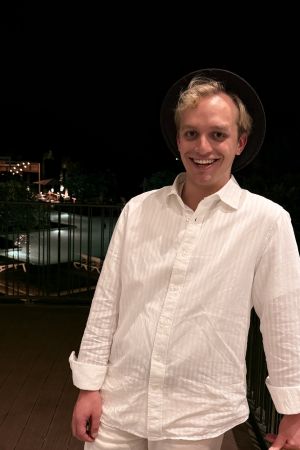
Benjamin Beese
Benjamin is a PhD student studying modern European intellectual and cultural history. He researches the apparent possibility (or impossibility) of social change in 19th- and 20th-century Europe. His research interests include critical theory and the Frankfurt School, European socialist movements, and theories of modernity.
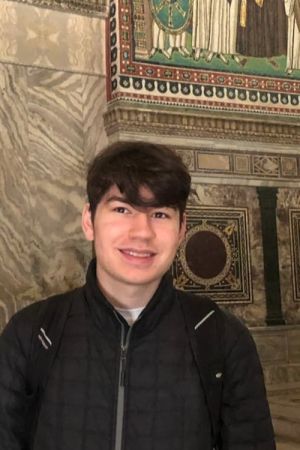
Nick Brattoli
Nick is a PhD candidate in the Department of Romance Studies, Italian Section. He received his B.A. at Wesleyan University in the College of Social Studies and Italian Studies. His research focuses on the relationship between film and the Italian postwar modernization process as understood through the prism of “circulation” as theoretically articulated in biopolitics and philosophies of praxis. He is also interested in the history and legacy of Italian social movements during Italy’s 1970s, a contentious decade of political, economic, and cultural social challenges and change.
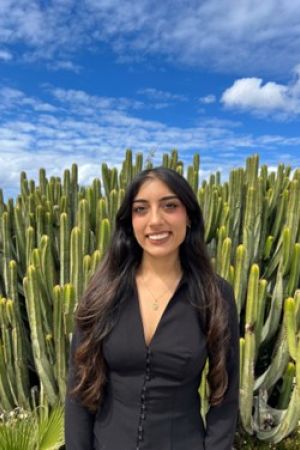
Aisha Fuenzalida Butt
Aisha Fuenzalida Butt is a PhD student in the Department of Anthropology and a CIAMS affiliate. Her research interests include the materiality of marine plastic and coastal environmental politics. Aisha’s work examines how residents of The Canary Islands, an autonomous zone of Spain, address the global problem of marine waste. She investigates how activists, scientists, and state officials mobilize around marine plastic waste. Her research joins ethnographic and archaeological methods to engage coastal Canarian communities in critically evaluating conservation projects. Her work positions the Canaries as a crucial site to understand how small islands manage ecological vulnerability and engage with planetary scale scientific and economic projects.
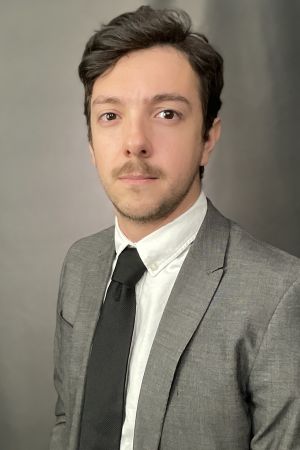
Duncan Eaton
Duncan Eaton is a PhD candidate in the History Department. His research is concerned with the economic and political history of 19th and 20th century Europe, with a focus on the economic challenges stemming from the dissolution of Austria-Hungary. His dissertation research analyzes the political economy of interwar Czechoslovakia in order to understand the proliferation of autonomist politics among rural Slovaks, particularly following the Great Depression.

Kaitlin Findlay
Director's Fellow
Kaitlin Findlay is a PhD candidate in the History Department. Her research examines the enactment of international norms of 'humane' confinement in the early twentieth century. Drawing from international, state, and community archives in five countries, Kaitlin examines the history of international humanitarian law, the politics of internationalism, and liberal empire. It interrogates the activity of international actors, like the Swiss-based International Committee of the Red Cross and Spanish consular officials, in monitoring detention practices. Drawing on insights from memory studies, Kaitlin asks what lessons the later forgetting of this international history in public commemoration might lend for understanding other histories of forced displacement in the twentieth century.
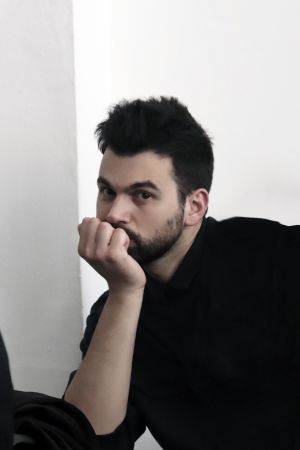
Filip Galic
Filip Galic is a PhD candidate in architectural history whose research examines how architectural ideology shifted as transformations in the transnational political economy and conflicts reshaped the conditions of architectural practice between Europe and post-Ottoman Non-Aligned geographies during the long Cold War. His work follows architect-planner-pedagogues moving across uneven postcolonial relations to ask how architectural knowledge was produced, translated, and mobilized for reciprocal ideological projects under asymmetrical conditions.
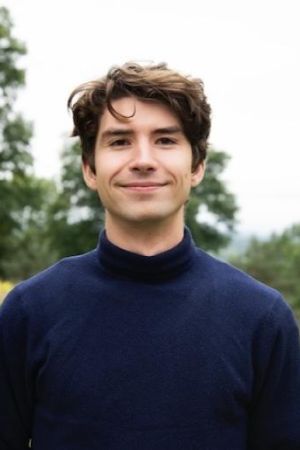
Thomas Gareau-Paquette
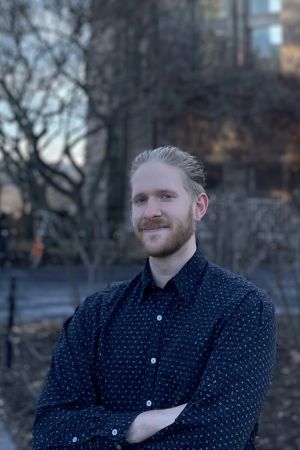
Spencer Hadley
Spencer Hadley (he/him/his) is a PhD candidate in the Department of German Studies. His dissertation project carries the provisional heading “Jazz Poetry in German Keys: Race, Gender, Sound and Transnational Exchange Since 1945.” It involves 20th and 21st century German-language poetry, prose and performance and is informed by Literary and Cultural Studies, (Jazz and Popular) Music and Sound studies, and Black European Studies.
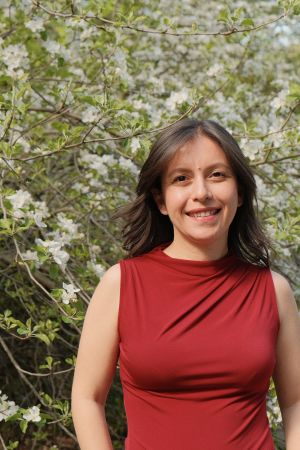
Aysegul Kilinc
Ayşegül Kılınç is a PhD student and Fulbright Fellow at Cornell University. Her research focuses on the intersection of climate policy, trade, and economics, with a particular emphasis on the effects of the EU Carbon Border Adjustment Mechanism. Beyond her academic work, she enjoys spending time in nature and crafting, and is passionate about sharing Turkish culture.
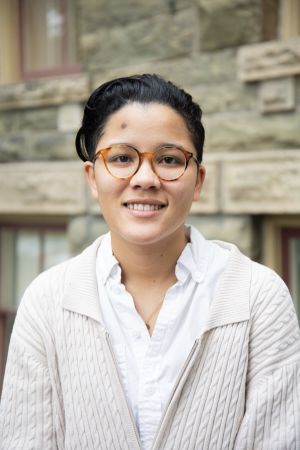
Angela Kothe
Angela Kothe is a fifth-year PhD Candidate in the Department of Government. Her research interests include queer politics and religion in Europe and the United States. Her dissertation explores the political economy of gender inequality in the United States and the United Kingdom.
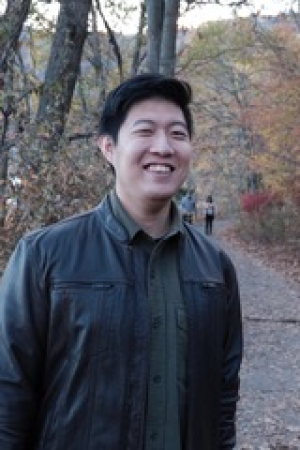
Boyang Liu
Boyang Liu is a PhD student in the Department of Government. His major field of study is Comparative Politics, with minor fields in American Politics and Methods. His research examines the sources of legitimacy and political support in non-democratic regimes, with a regional focus on Russia, Central Asia, and the broader post-Soviet region. His current research explores how the Russo-Ukrainian war has affected Russian citizens’ willingness to participate in political activities, including protests.
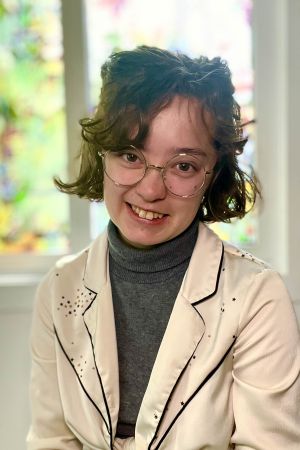
Kaori Quan
Kaori Quan is a PhD student in French History. Her research centers on the intellectual history of Revolutionary France, with a particular focus on Parisian insurrections and the ways in which the process of documenting them influenced the trajectory of both modern democracy and history-writing.
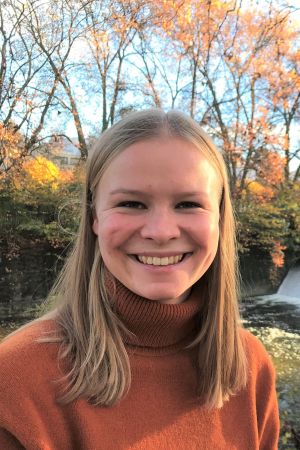
Greta Schenke
Greta Schenke is a fourth-year PhD student in Comparative Politics in the Department of Government. Her research examines the political economy of state-building, nationalism, and democratic representation, combining historical and contemporary perspectives.
Her dissertation investigates the political origins of state building in late nineteenth-century Prussia. It explores how international economic competition shaped labor-market and migration policies, asking why political elites pursued policies that imposed substantial economic costs.
In another line of her research, Greta studies questions related to democratic representation and the origins of elite accountability. Across her work, she combines quasi-experimental and mixed-methods research designs, drawing on quantitative text analysis, statistical methods, and archival research.
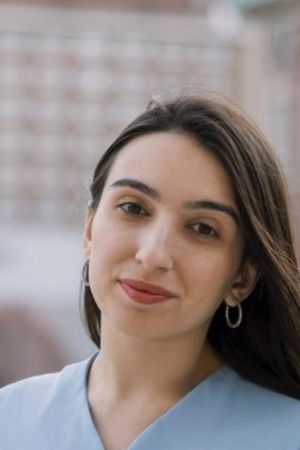
Sinziana Stanciu
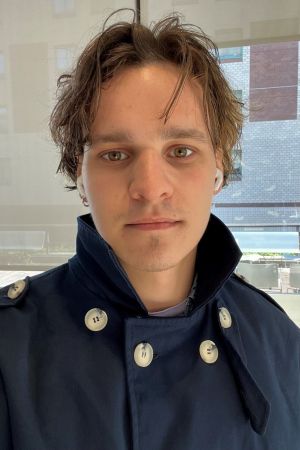
Georgy Tarasenko
Georgy Tarasenko is a PhD student in the Department of Government at Cornell University. His major field of study is Comparative Politics, with minor fields in Political Thought and Methods. Previously, he was a researcher and lecturer at the Center for Institutional Studies at HSE University in Moscow and the Digital Humanities Center at ITMO University in Saint Petersburg.
Georgy is generally interested in freedom as both a theoretical and empirical phenomenon, with a particular focus on non-democratic and illiberal politics. One of his research agendas examines wartime politics, specifically investigating Russian mercenary violence in Africa and the impact of casualties in the Russo-Ukrainian war on public opinion. He explores these questions using various interdisciplinary computational approaches, including statistics, machine learning, experiments, archival methods, and GIS.
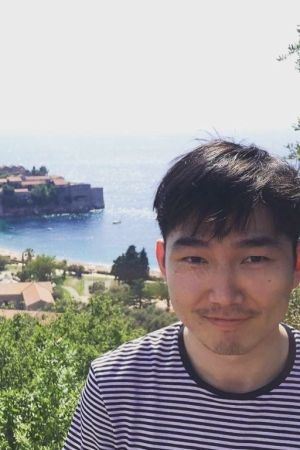
Xinyu H. Zhang
Director's Fellow
Xinyu H. Zhang is a PhD candidate in the Department of Comparative Literature and holds an M.A. in Icelandic Literature from the University of Iceland. He is a reader of critical theories and Far North literature (Nordic-Scandinavian texts, especially those from Iceland, the Faroe Islands, and Greenland). He seeks to learn from the poignant dialectics between literary history and natural history in narratives of uneasy settlement in the Far North. He has published on the production of contemporary Icelandic novels in relation to a pervasive “global” atmosphere of techno-environmental-economic anxiety, which is entangled with Iceland’s own postcoloniality. He has also written on the question of relation itself, through the elliptical encounters between Jacques Derrida and Édouard Glissant. He has translated many works of Icelandic literature into Chinese.
Past Institute for European Studies Graduate Fellows
| 2025-26 | 2024-25 | 2023-24 |
|---|---|---|
| Frances Cayton (Spring) | Alican Taylan | Chris Mingo |
| Duncan Eaton | Amelia Arsenault | Emre Susamci |
| Georgy Tarasenko | Angela Kothe | Francis Cayton |
| Kaitlin Findlay | Chiara Visentin | Judith Tauber |
| Spencer Hadley | Chris Mingo | Morton Wan |
| Rachel Horner (Fall) | Frances Cayton | Savannah Caldwell |
| Angela Kothe | Madeleine Lemos | Stefan Ivanovski |
| Madeleine Lemos Director's Fellow | Maria Luisa Palumbo | Thari Zweers |
| Julia Sebastien | Matt Finck | |
| Nora Siena | Nora Siena | |
| Chiara Visentin Director's Fellow | Priyanka Sen | |
| Xinyu H. Zhang | Rachel Horner | |
| Victoria Phil Sorensen |